
'The corporate tax cuts will obviously result in lower tax payments by companies,' says Central Board of Direct Taxes member Akhilesh Ranjan who retires after 37 years in government service.

Indian funds did better than Asian ones in only four of the 10 months -- till October. Despite much market optimism, presumably around policy interventions and guided by buoyant flows, India's macro backdrop may be turning for the worse.

BMA's clients allege that depository firm CDSL and stock exchanges did not act on their complaints, prompting them to protest before Sebi. They say their shares have been transferred to a pool account without their knowledge and have been used to avail loans. Clients alleged that BMA has pledged their securities with a leading private bank, who could have sold their holdings.
What's required is proper implementation of the rules and better coordination between market intermediaries such as stock exchanges and clearing members who play a key role in monitoring brokerages.

The contentious issue that Tata Trusts is challenging is the date of the order, which makes it liable to pay a much higher amount of tax under the new tax provision introduced in June 2016 concerning charitable trusts.

This was a fresh probe based on the inspection of certain derivative contracts both on the BSE and NSE.

Lower cost and easier termination may well be among the reasons that companies seek to have employees on contract. The share of employees on contract has increased to 57.3 per cent of the total workforce this year as compared to 53.7 per cent in the previous year.

The lack of a strong diversity policy on the part of companies, a limited pool of women candidates as well as socio-cultural factors contribute to their low numbers.

Kochhar was directed to return about Rs 10 crore in cash bonuses she had received as CEO, and also give up close to 6 million shares of the bank she had as stock option, which was about Rs 350 crore.

This is because no prosecution complaint has been filed in any of these cases under the Black Money Act.
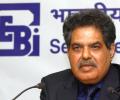
In his first two years, Tyagi, a Himachal Pradesh cadre IAS officer, has implemented challenging stock market reforms and taken action against high-profile corporate entities.
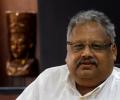
While Rakesh Jhunjhunwala is up 14.9% during the year to Rs 12,381 cr, Ashish Dhawan is up 68.4% to Rs 810 cr, Ashish Kacholia is down 23.4% to Rs 515 cr, Rajiv and Dolly Khanna are down 74.6% to Rs 116 cr and Vijay Kedia is down 6.2% to Rs 294 cr.

The biggest spender was Tata Motors, with Rs 4,224.6 crore assigned under the R&D head.

The department apparently suspects the use of shell firms or front entities in some aspects of such remittance. Money might, it suspects, have moved in some cases from tax-free jurisdictions or tax havens to accounts in the UAE and some South Asian countries.

Session-wise data indicates small investors have taken money off the table in more sessions than they have pumped in additional capital.
ED has come across two immovable assets - one flat in Dubai and one land parcel in London. It is examining the valuation of both properties, estimated between Rs 150 crore and Rs 200 crore.
It has registered 2,000-plus money laundering cases and about 12,000 forex violation ones in the 14 years since it was established. Yet, its probes have resulted in no more than 13 convictions from nine cases of money laundering since 2005.

Around 41 per cent of these companies saw such instances, compared to the global average of 29 per cent. India's number is higher than other countries such as the United States (26 per cent), the United Kingdom (32 per cent) and Japan (27 per cent). It is also worse than other emerging markets. China had 39 per cent of firms affected by data theft. It was 19 per cent and 16 per cent for Brazil and Russia, respectively.

Police FIR reveals the bank had replaced 44 loan accounts of HDIL with 21,049 fictitious loan accounts. These 21,049 were actually not created in the core banking solution of the bank, but were mere entities in the advances master indent submitted to RBI for conducting its inspection for the year ended March 2018.

This is despite the private sector companies outperforming their public sector counterparts, reports Sachin P Mampatta.
 © 2026 Rediff.com - Advertise with us - Disclaimer - Privacy Policy - Sitemap - Feedback - About us - Terms of use - Grievances